

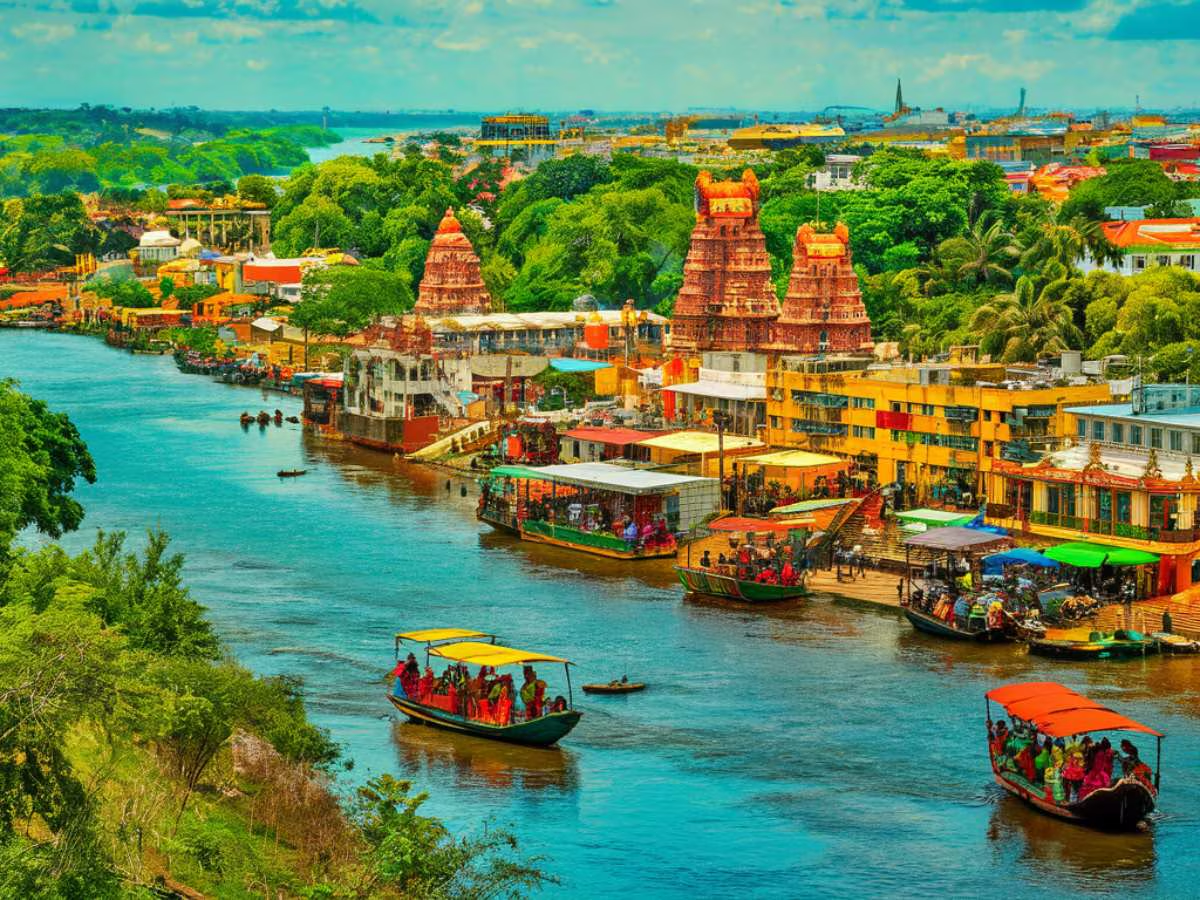
Vijayawada wasn’t supposed to be the high point of my trip, to be honest. Like many visitors, I knew it was a busy city on the banks of the Krishna River, one of Andhra Pradesh’s major commercial centres, and famous for the Kanaka Durga Temple. I saw crowded streets, bustling marketplaces, and a quick stop before moving on to another place. But since I had two full days to spare, I decided to take my time rather than rush through. I am glad that I did.
However, amid riverfront sunsets, centuries-old caverns, fiery Andhra cuisine, and surprisingly tranquil views, Vijayawada revealed a side that most travel itineraries hardly mention.
Day one started with the city’s most famous landmark
A first visit to Vijayawada would not be complete without seeing Kanaka Durga Temple. Perched atop Indrakeeladri Hill, the temple offers a view of the city below as well as the Krishna River. Whether they come for the expansive views or its spiritual significance, it is easy to understand why millions of devotees congregate here every year, especially during Navratri.
I realised something as I stood at the top. Vijayawada is more than just a city with roads and structures because it is surrounded by hills and one of India’s main rivers.
Interestingly, the Kanaka Durga Temple, one of the major Shakti Peethas, attracts thousands of pilgrims from all over the country during the Dasara celebrations.
Then I walked along the Krishna River
Vijayawada’s character is so significantly influenced by the Krishna River that it nearly seems like a separate landmark. It was unexpectedly soothing to see boats glide over the lake while the magnificent Prakasam Barrage spanned the river.
At night, street merchants emerged, families congregated along the riverbank, and the city slowed down so much that I forgot I was in one of Andhra Pradesh’s busiest cities. A simple stroll along a river can sometimes show you more about a place than a museum could.
The caves were unlike anything I expected
These multi-storey rock-cut caves were carved out of a sandstone hill over 1,500 years ago and showcase incredible craftsmanship with intricate pillars, sculptures, and one of the largest reclining statues of Lord Vishnu made from a single granite block. Walking through the caverns was like stepping into another area. Many tourists who visit Vijayawada are not aware that this archaeological gem is a short drive away.
Vijayawada’s food deserves more attention
Andhra Pradesh never lets you down when it comes to its cuisine. And Vijayawada proved that on my first meal. For breakfast, there were crisp dosas, hot chutneys, fluffy idlis, and steaming filter coffee. Hotels in Vijayawada serve everything from regional delicacies to North Indian items and continental too. You just need to choose the right one for your taste. However, I was there to taste the authentic local cuisine.
I first came across a traditional Andhra thali at lunch, which was filled with pappu, rasam, pungent pickles, scorching curries, and copious amounts of rice. By dusk, I was joyfully searching for something regional, some specialities like spicy biryani, mirchi bajji, and punugulu. Let’s just say that to balance what I ate, I walked a lot.
Day two took me beyond the city centre
One of India’s biggest river islands, the exquisitely designed Bhavani Island, provided a welcome change of scenery, boating, and river views. Later, at dusk, I went back to the Prakasam Barrage. It felt entirely different from the night before because of the shifting hues over the Krishna River. That was one aspect about Vijayawada that I valued. You get rewarded for slowing down.
The markets were full of local flavour
I discovered stores in Vijayawada that sold everything from handloom sarees, handicrafts, and fresh fruit to traditional Andhra sweets and spices. I didn’t really love making purchases. I was just taking in the sights and sounds of everyday life: the frenetic energy that characterises Indian market streets, the smells of freshly cooked food, and shopkeepers conversing with frequent customers. The city feels most genuine there.
Two days felt just right
Did two days feel right? Not at all. However, I had enough time over the course of two days to look past the apparent attractions. I had the opportunity to learn about the rhythm of Vijayawada rather than viewing it as a stopover. A city that strikes a balance between religion and business, history and contemporary advancements, calm evenings beside the river and hectic mornings – you don’t learn that in a matter of hours.
Final thoughts
Rather, I discovered historic caves, stunning riverbank vistas, mouthwatering Andhra food, lively local markets, and a city that seems much more varied than its name implies. Sometimes a destination just requires a little extra time.
Those extra two days fundamentally altered my perception of Vijayawada and served as a reminder that some of the most memorable travel experiences occur when you give up attempting to get to the next destination.